

A practical guide to diagnosing and solving NPSH issues to protect your wet-end components and bearings.
Slurry pump cavitation is a severe issue that can destroy your equipment. If your pump sounds like it is pumping marbles or gravel, but you know you are only transferring fine sand, you are facing a serious cavitation problem.
Slurry pump cavitation is one of the most destructive phenomena in slurry transportation. It doesn’t just reduce your pump’s flow rate and head; it physically eats away at your high-chrome impellers and destroys your bearing assemblies through violent vibration. To save your wet-end parts from premature failure, you need to understand what cavitation is, how to spot it, and how to fix it on-site.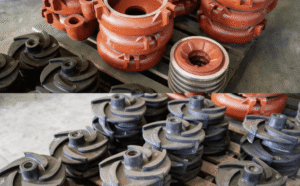
-
What Actually Happens During Cavitation?
In simple terms, cavitation is the formation and subsequent implosion of vapor bubbles inside the pump.
When the pressure of the incoming slurry drops below its vapor pressure at the suction inlet, the liquid literally begins to boil, forming millions of tiny vapor bubbles. As these bubbles travel into the high-pressure areas of the impeller, they violently collapse (implode).
| The Physics of Destruction: These implosions generate localized micro-jets with pressures up to 10,000 bar and temperatures of several thousand degrees. Over time, this constant micro-hammering creates distinctive “pockmarks” or honeycomb-like pitting on the impeller vanes, rapidly destroying even the toughest high-chrome A05 alloys. |
-
How to Spot Cavitation on Your Site (The Symptoms)
Before you strip down the pump and find a pitted impeller, you can usually diagnose cavitation through three clear warning signs:
- The “Marbles” Noise: A distinct rattling, popping, or crackling sound inside the pump casing, resembling gravel running through the pipeline.
- Excessive Vibration: Cavitation causes severe hydraulic imbalance. This vibration quickly travels up the shaft, leading to premature bearing failure and leaking shaft seals.
- Loss of Flow and Head: As vapor bubbles occupy the space inside the impeller passages, the pump loses its prime, causing a sudden drop in discharge pressure and flow rate.
-
The Root Cause: Understanding NPSH
To solve cavitation, you have to talk about NPSH (Net Positive Suction Head).
- NPSHr (NPSH Required): The minimum suction pressure the pump needs to operate without cavitating. This is determined by the pump manufacturer’s design.
- NPSHa (NPSH Available): The actual pressure available at the pump suction inlet, determined by your site layout and pipeline configuration.
The Golden Rule of Slurry Pumping:
NPSHa >= NPSHr + (0.5 to 1.0) meters
If your NPSHa drops below your pump’s NPSHr, cavitation is 100% guaranteed.
-
How to Prevent and Fix Cavitation (Troubleshooting Checklist)
If your pump is currently cavitating, here is how you troubleshoot the system:
- Shorten the Suction Pipe: Reduce the length of your suction line and eliminate unnecessary elbows or valves. Every bend increases friction loss and drops your NPSHa.
- Increase Suction Pipe Diameter: A larger suction pipe lowers fluid velocity, which significantly reduces friction loss and boosts suction pressure.
- Raise the Sump Level (Increase Positive Head): If possible, raise the fluid level in your feed tank or sump, or lower the pump. This uses gravity to increase the pressure at the suction inlet.
- Clean the Suction Strainer: A partially clogged intake screen or suction valve restricts flow and acts as a pressure drop, triggering immediate cavitation.
- Reduce Pump Speed (RPM): If the pump is running too fast for the system’s supply capability, slowing it down will lower its NPSHr.
Need Help with Sizing and System Design?
Many cavitation issues are born on the drawing board due to incorrect pipeline calculations.
At Vflu, we don’t just supply 100% interchangeable Warman® equivalent parts; we help you prevent premature wear before it starts. As a former hydraulic design engineer with years of experience calculating pipeline systems, I can help you audit your current sump layout and NPSH profile.
If you are facing persistent wear issues or mysterious vibrations, email your system parameters to info@vfluslurrypumps.com or send me a message on WhatsApp at +86 18624054132 for a free technical consultation.